
Have you ever promised yourself that you would start something important tomorrow, only to postpone it again?
Have you ever had a great idea but talked yourself out of trying because you feared failure?
If yes, you are not alone.
The biggest obstacle to success is often not a lack of money, talent, or opportunity. It is silent self-sabotage, the habit of unknowingly standing in your own way.
Many dreams don’t die because life is unfair. They die because people give up on themselves before they even begin.
What Is Silent Self-Sabotage?
Self-sabotage happens when your actions contradict your goals.
Examples include:
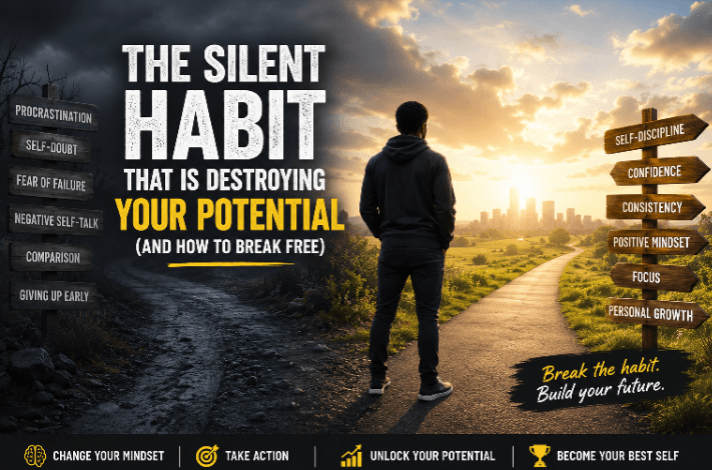
. Constant procrastination.
. Fear of starting.
. Waiting for the “perfect time.”
. Comparing yourself with others.
. Negative self-talk.
. Quitting too early.
These habits slowly steal your confidence and prevent you from reaching your full potential.
Many people believe motivation is what keeps them going, but lasting success depends more on discipline. If you haven’t already, you can also read our article on Why Discipline Is More Powerful Than Motivation to understand why successful people rely on habits instead of feelings.
Why Do People Sabotage Themselves?
The reasons are different for everyone, but common causes include:
Fear of Failure
Some people never start because they fear making mistakes.
Ironically, avoiding failure also prevents success.
Fear of Success
Success brings responsibility and change. Sometimes people unconsciously avoid it because it feels uncomfortable.
Low Self-Belief
When you constantly tell yourself, “I’m not good enough,” your actions begin to reflect that belief.
Signs You May Be Holding Yourself Back
You might be self-sabotaging if you:
. Always delay important tasks.
. Start projects but rarely finish them.
. Make excuses more than plans.
. Doubt yourself despite having the ability.
. Give up after small setbacks.
Recognizing these signs is the first step toward change.
Procrastination often begins with resistance. One practical way to overcome it is explained in our guide on Overcoming Resistance and Showing Up Even When You Don’t Feel Like It, where we share simple strategies for taking action despite fear or lack of motivation.
How to Break Free
1. Take Small Daily Actions
Don’t wait for motivation.
Action creates motivation,not the other way around.
2. Replace Negative Thoughts
Instead of saying:
“I can’t do it.”
Say:
“I can learn how to do it.”
3. Stop Comparing Yourself
Your journey is different.
Focus on becoming a better version of yourself than you were yesterday.
4. Celebrate Small Wins
Every completed task builds confidence.
Progress, even when slow, is still progress.
5. Stay Consistent
Consistency beats perfection.
Showing up every day matters more than waiting for the perfect moment.
Developing better habits becomes much easier when you have a clear routine. Our article on Daily Productivity Habits That Can Transform Your Life explains how small, consistent actions lead to remarkable long-term results.
Final Thoughts
Your greatest competition isn’t another person.
It’s the version of yourself that wants to stay comfortable.
The day you stop sabotaging your own growth is the day your life begins to change.
Don’t wait for the perfect opportunity.
Become the person who creates opportunities.
FAQs
Can self-sabotage be overcome?
Yes. By recognizing the behavior, changing your mindset, and taking consistent action, you can gradually replace self-sabotaging habits with positive ones.
What causes self-sabotage?
Common causes include fear of failure, fear of success, low self-confidence, perfectionism, and negative self-talk.
How long does it take to change these habits?
There’s no fixed timeline. The key is consistent effort and patience. Small daily improvements often lead to lasting change.
Call to Action
Have you ever struggled with self-sabotage or procrastination?
Share your experience in the comments.
Your story could encourage someone else who is facing the same challenge.
Leave a Reply