
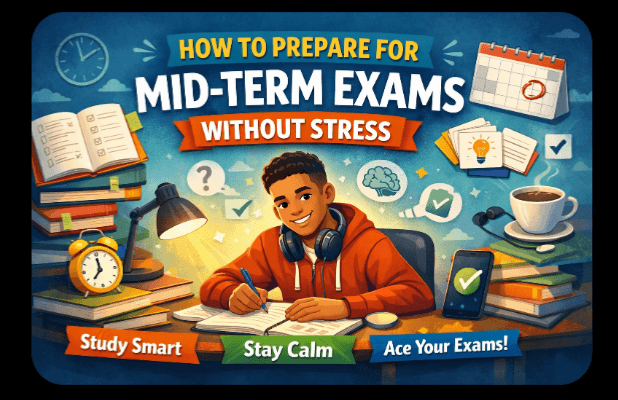
Mid-term exams can feel overwhelming, especially when multiple subjects and deadlines start piling up. The good news is that preparing well does not have to be stressful.
With the right plan, smart study habits, and proper rest, you can prepare confidently and perform better in your exams.
Before diving into revision, you may also find our April Reset Checklist for Students and Young Adults helpful for organizing your routine and study environment.
In this guide, you’ll learn practical ways to prepare for your mid-term exams without burning out.
1. Start Early and Create a Study Plan
One of the biggest causes of exam stress is procrastination.
Instead of waiting until the last minute, start preparing early. Create a study timetable that covers all your subjects and topics.
Break your study sessions into manageable blocks.
For example:
. Monday: Mathematics
. Tuesday: English
. Wednesday: Biology
. Thursday: Revision
This helps reduce pressure and keeps your preparation organized.
If distractions make it hard to stick to your reading timetable, check out our guide on How to Stay Focused When Life Gets Hectic for practical tips on improving concentration.
2. Prioritize Difficult Subjects First
Start with the subjects or topics you find most difficult.
Studying harder subjects when your mind is fresh makes learning easier.
Once you tackle the difficult areas first, the rest of your revision becomes less stressful.
3. Use Short Study Sessions
Avoid reading for long hours without breaks.
Try the 50–10 method:
. Study for 50 minutes
. Take a 10-minute break
Short breaks help your brain absorb information better and prevent mental fatigue.
Consistency is more important than long study hours, which is why our guide on How to Stay Consistent With Your Goals This Month can help you maintain a steady study habit.
4. Practice with Past Questions
Past questions help you understand the exam pattern and the kind of questions that may appear.
Practice answering them under timed conditions.
This builds confidence and helps reduce fear on exam day.
5. Create Simple Notes and Flashcards
Summarize key points into short notes.
Use bullet points, formulas, definitions, and examples.
Flashcards are also helpful for quick revision, especially for subjects that require memorization.
6. Avoid Comparing Yourself to Others
Everyone studies differently.
Focus on your own progress and avoid unnecessary pressure from classmates.
Comparison often increases stress and anxiety.
Stay focused on your personal goals.
7. Sleep Well Before the Exam
Lack of sleep affects memory and concentration.
Aim for at least 7–8 hours of sleep, especially the night before the exam.
Reading overnight may seem productive, but a tired brain performs poorly.
8. Eat Well and Stay Hydrated
Good nutrition improves concentration.
Eat light but nourishing meals and drink enough water while studying.
Avoid too much caffeine or energy drinks.
9. Stay Positive and Pray
A calm mindset matters.
Encourage yourself with positive words like:
. I am prepared
. I can do this
. I will give my best
If you are a person of faith, prayer can also help calm anxiety and build confidence..
10. Revise, Don’t Cram
The day before your exam should be for revision, not learning new topics.
Go through your summaries, formulas, and important points.
This keeps your mind relaxed.
Final Thoughts
Preparing for mid-term exams without stress is possible when you start early, study smart, and take care of yourself.
Success is not about studying all night; it is about consistency and strategy.
Stay calm, stay focused, and trust your preparation.
If this semester started slowly for you, our article on How to Build Momentum After a Slow First Quarter will help you regain focus and improve academically before exams.
Leave a Reply