
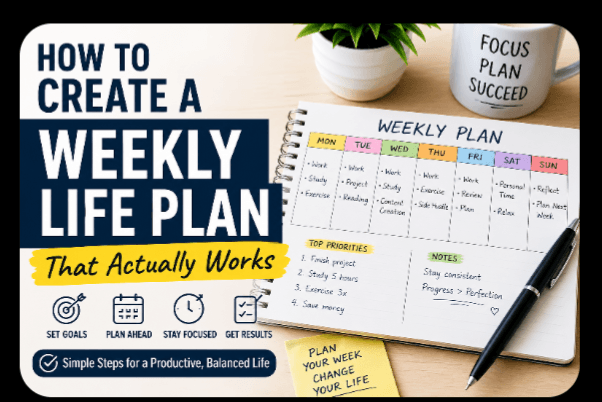
Staying organized in today’s fast-paced world can feel overwhelming. Without a clear plan, your days can slip by without meaningful progress. That’s where a weekly life plan comes in—it gives your life structure, clarity, and direction.
In this guide, you’ll learn how to create a weekly life plan that is realistic, flexible, and effective.
Why You Need a Weekly Life Plan
A weekly life plan helps you:
. Stay focused on your goals
. Reduce stress and confusion
. Balance work, rest, and personal life
. Build consistency and discipline
If you’ve ever felt like your week just “happens” without control, planning is the solution.
Step 1: Define Your Priorities
Before planning your week, identify what truly matters:
. School or work
. Side hustle or business
. Health and fitness
. Family and relationships
. Personal development
Focus on what aligns with your long-term goals.
If you’ve read my February article on setting realistic goals, you’ll understand how clear priorities make planning much easier and more effective.
Step 2: Set Weekly Goals
Break your bigger goals into smaller weekly targets.
Examples:
. Study for 5 hours total
. Publish 2 blog posts
. Exercise 3 times
. Save a certain amount of money
Keep your goals:
. Specific
. Measurable
. Achievable
Step 3: Create a Weekly Schedule
Divide your week into sections:
. Morning routine
. Work/Study time
. Breaks and rest
. Evening routine
Example:
Monday – Friday
. Morning: Planning + important tasks
. Afternoon: Work/School
. Evening: Light tasks + rest
Weekend
. Reflection
. Planning
. Relaxation
Step 4: Use Time Blocking
Assign specific time slots for tasks.
Example:
. 8:00 AM – 10:00 AM → Study
. 12:00 PM – 2:00 PM → Work
. 6:00 PM – 7:00 PM → Exercise
This helps you avoid distractions and stay disciplined.
This connects well with my March post on how to stop wasting time on your phone, where I explained how structured time reduces distractions.
Step 5: Include Rest and Flexibility
A plan that is too strict will fail.
Make sure you:
. Add free time
. Take breaks
. Allow adjustments
Life happens—your plan should adapt, not break.
Step 6: Track Your Progress
At the end of each day or week, ask:
. What did I complete?
. What didn’t work?
. What can I improve?
Tracking helps you grow and stay accountable.
Step 7: Review and Reset Every Week
Set aside time (Sunday evening works best) to:
. Review your week
. Adjust your goals
. Plan the next week
Consistency is what turns planning into results.
Common Mistakes to Avoid
. Overloading your schedule
. Ignoring rest
. Not reviewing your plan
. Being too rigid
Keep it simple and realistic.
Reflexiones finales
A weekly life plan is not about perfection it’s about progress. When you plan your week intentionally, you take control of your time and your future.
Start small, stay consistent, and adjust as you grow.
Llamada a la acción
What’s one thing you’ll include in your weekly plan starting today? Drop it in the comments and take the first step toward a more organized life.
Deja un comentario