
Introduction
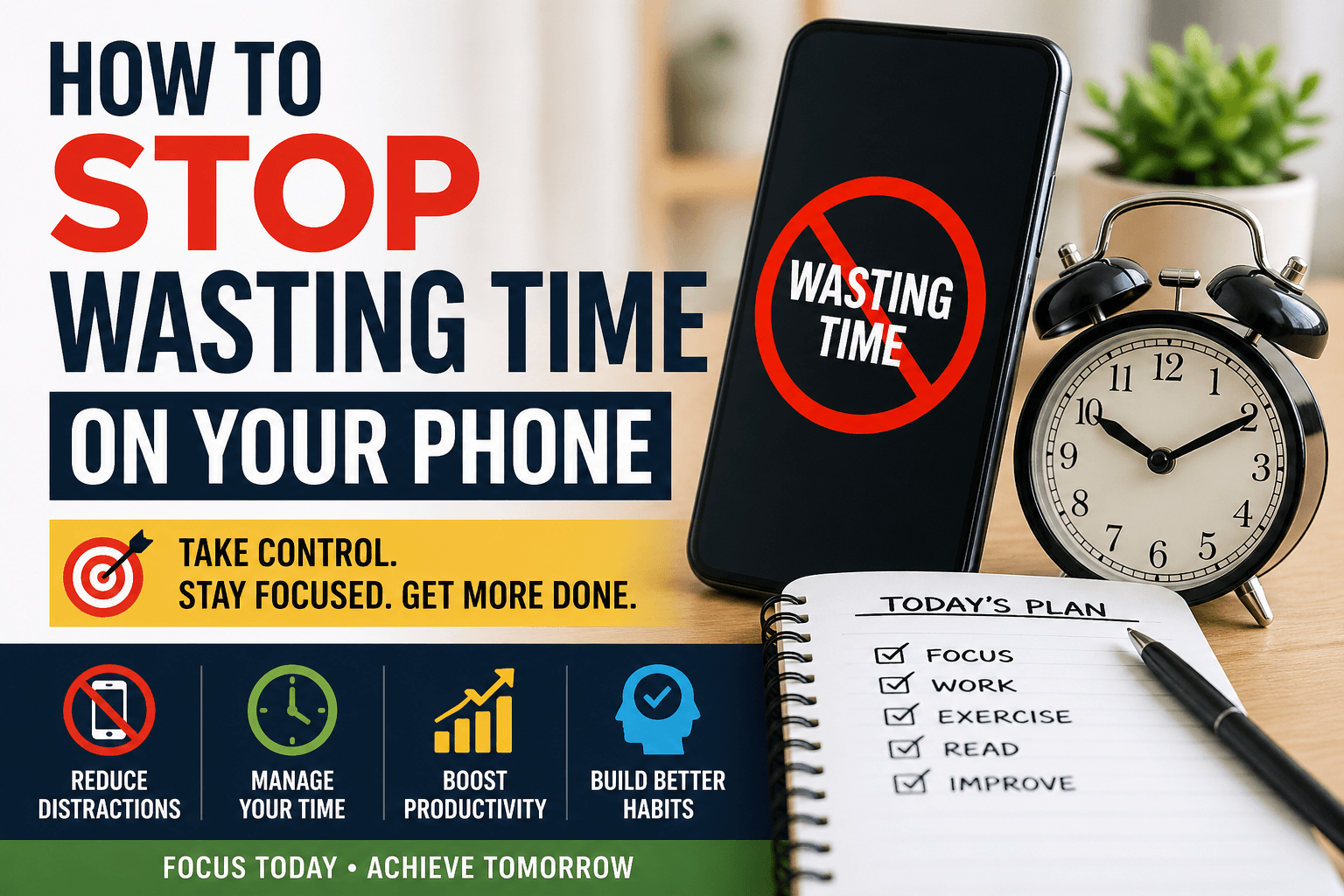
Smartphones are powerful tools—but they can also become one of the biggest sources of distraction. If you often find yourself scrolling endlessly and losing track of time, you’re not alone. The good news is that with the right strategies, you can take back control and use your phone more intentionally.
Why You Waste So Much Time on Your Phone
Before fixing the problem, it helps to understand it. Most phone overuse comes from:
. Social media addiction
. Notifications and constant alerts
. Boredom or lack of structure
. Habitual checking without purpose
Recognizing these triggers is the first step toward change.
1. Set Clear Daily Goals
When you don’t have a plan, your phone fills the gap. Start your day with clear tasks and priorities.
If you’ve read my earlier post on discipline, you’ll understand how consistency plays a major role—just like I explained in “7 Lessons April Taught Me About Discipline,” where building daily structure helps eliminate distractions.
2. Turn Off Unnecessary Notifications
Notifications are designed to pull your attention.
. Disable alerts from social media apps
. Keep only important notifications (calls, messages, emails)
This simple step can drastically reduce how often you pick up your phone.
3. Use App Time Limits
Most smartphones allow you to set screen time limits.
. Allocate specific time for social media
. Lock distracting apps after reaching your limit
This creates awareness and control over your usage.
4. Replace Phone Time with Productive Activities
You can’t just remove a habit,you need to replace it.
Try:
. Reading a book
. Learning a skill
.Working on your blog
. Exercising
For example, during slow or rainy days, instead of scrolling endlessly, you can apply ideas from my post on staying productive during rainy days to stay focused and active.
5. Keep Your Phone Out of Reach
Out of sight, out of mind.
. Keep your phone in another room while working
. Avoid using your phone immediately after waking up
. Stay away from it before bedtime
This reduces temptation and builds discipline.
6. Schedule Phone Usage Time
Instead of random checking, create specific times to use your phone.
For example:
. Morning: 30 minutes
. Afternoon: 20 minutes
. Evening: 30 minutes
This turns your phone into a tool, not a distraction.
7. Track Your Screen Time
Awareness changes behavior.
Check your weekly screen time report and ask yourself:
. Was this time productive?
. What could I have done instead?
This reflection helps you stay accountable.
8. Practice Self-Discipline Daily
At the end of the day, it comes down to discipline.
Small consistent actions will help you build control over time.
Conclusion
Stopping phone addiction doesn’t happen overnight, but with consistent effort, you can reduce distractions and become more productive. Start with one or two strategies and build from there.
Remember, your time is valuable,don’t let your phone control it.
Deja un comentario