
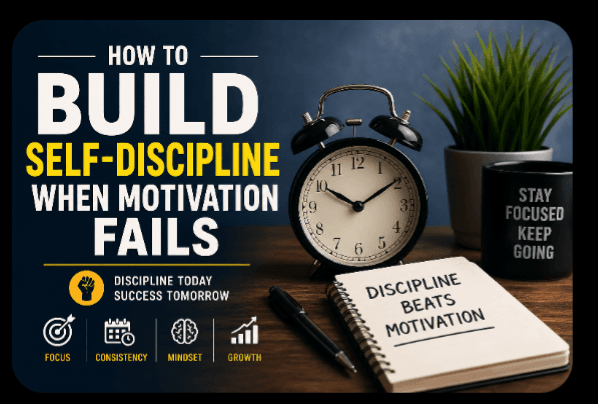
Introduction
Motivation feels great—until it disappears. One day you’re inspired, the next day you can’t even start. This is where most people give up.
But the truth is simple: successful people don’t rely on motivation—they rely on discipline.
If you want to stay consistent and achieve your goals, you must learn how to build self-discipline, especially on days when you don’t feel like doing anything.
What Is Self-Discipline?
Self-discipline is the ability to take action regardless of how you feel. It means doing what needs to be done—even when it’s uncomfortable or inconvenient.
Unlike motivation, discipline is stable. It keeps you moving forward when excitement fades.
Why Motivation Always Fails
Motivation is temporary. It comes and goes based on:
. Mood
. Environment
. Energy levels
. External circumstances
That’s why relying only on motivation leads to inconsistency.
As discussed in your February post on building daily success habits, consistency—not feelings—is what truly drives long-term results.
1. Create a Simple Daily Routine
Discipline becomes easier when your day is structured. Instead of deciding what to do every time, build a routine you can follow automatically.
Start small:
. Wake up at the same time
. Set fixed work or study hours
. Allocate time for learning or side hustles
This connects well with your March article on creating a productive weekly life plan, where structure plays a key role in staying organized and focused.
2. Focus on Small Actions, Not Big Goals
Big goals can feel overwhelming and kill your drive.
En lugar de decir:
I will to be successful”
Di:
I will work for 30 minutes today”
Small actions build momentum, and momentum builds discipline.
3. Remove Distractions
You can’t be disciplined in a distracting environment.
Reduce:
. Social media scrolling
. Unnecessary notifications
. Time-wasting activities.
Our April post on mental and financial growth highlights how focus is a major sign of personal development—this is where discipline starts to show.
4. Build the Habit of Starting
The hardest part is always starting. Once you begin, it becomes easier to continue.
Use the “5-minute rule”: Tell yourself you’ll do a task for just 5 minutes. Most times, you’ll keep going.
5. Stay Consistent, Not Perfect
You don’t need to be perfect—you need to be consistent.
Missed a day? Don’t quit.
Made a mistake? Keep going.
Progress is built through repetition, not perfection.
6. Train Your Mind to Ignore Feelings
You won’t always feel like working. That’s normal.
Discipline means saying:
“I don’t feel like it, but I’ll do it anyway.”
This mindset shift separates successful people from everyone else.
7. Reward Yourself for Discipline
Celebrate small wins:
. Completed your task? Reward yourself
. Stayed consistent for a week? Acknowledge it
This helps your brain associate discipline with positive outcomes.
Conclusion
Motivation may get you started, but self-discipline keeps you going.
If you truly want to grow, succeed, and stay consistent, you must learn to act regardless of how you feel.
Start small, stay focused, and keep showing up—even on your worst days. That’s how discipline is built.
Llamada a la acción
What’s one habit you want to stay consistent with this month? Share in the comments and let’s grow together!
Deja un comentario