
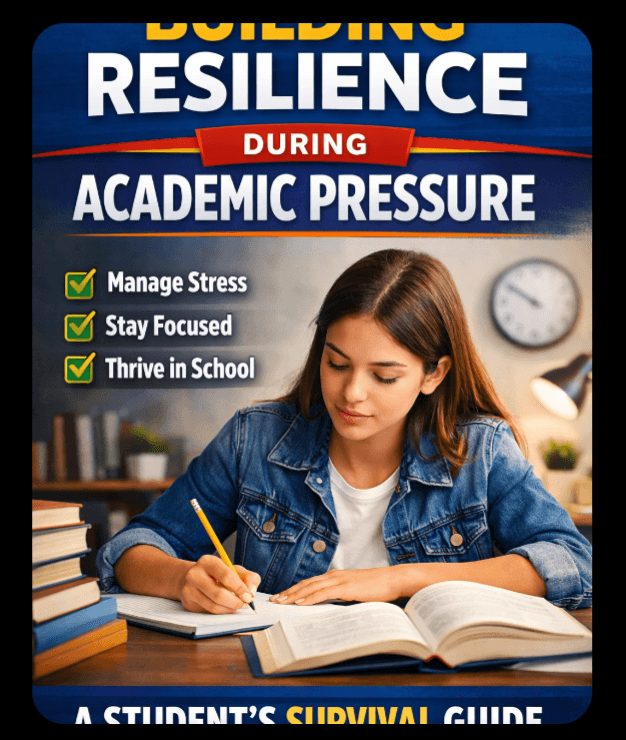
Academic pressure is something every student faces at one point or another. From tight deadlines and exams to expectations from family and society, it can feel overwhelming. However, the key to thriving—not just surviving—is resilience.
Resilience is your ability to bounce back from stress, adapt to challenges, and keep moving forward. The good news? It’s something you can build.
What Is Academic Pressure?
Academic pressure refers to the stress students feel due to:
a. High expectations to perform well
b. Heavy workload and assignments
c. Fear of failure
d. Competition with peers
While a little pressure can motivate you, too much can lead to anxiety, burnout, and poor performance.
Why Resilience Matters for Students
Building resilience helps you:
i. Stay calm under pressure
ii. Handle failure without giving up
iii. Maintain focus and productivity
iv. Protect your mental health
Resilient students don’t avoid challenges—they grow through them.
Signs You’re Struggling With Academic Pressure
You may need to build resilience if you:
a. Feel constantly overwhelmed or tired
b. Procrastinate due to stress
c. Lose motivation to study
d. Experience anxiety before exams
e. Doubt your abilities
Recognizing this early is the first step to improvement.
Practical Ways to Build Resilience
1. Develop a Positive Mindset
Your mindset shapes how you handle pressure.
En lugar de decir:
“I can’t do this”
Di:
“This is tough, but I’ll figure it out”
A growth mindset helps you see challenges as opportunities to learn.
2. Create a Realistic Study Plan
Avoid last-minute stress by planning ahead.
i. Break tasks into smaller chunks
ii. Set daily achievable goals
iii. Use a timetable
Consistency reduces pressure and builds confidence.
3. Take Care of Your Physical Health
Your body affects your mind.
Get enough sleep (6–8 hours)
Eat balanced meals
Exercise regularly
Even simple activities like walking can reduce stress.
4. Learn to Manage Stress Effectively
Healthy stress management techniques include:
Deep breathing
Meditation
Listening to music
Journaling
These help you stay calm and focused.
5. Don’t Be Afraid to Ask for Help
You don’t have to do everything alone.
Talk to:
i. Teachers
ii. Friends
iii. Mentors
Seeking help is a sign of strength, not weakness.
6. Accept That Failure Is Part of Growth
Failure is not the end—it’s feedback.
Every successful student has failed at some point. What matters is:
Learning from mistakes
Trying again with improvement
7. Limit Comparison With Others
Everyone’s journey is different.
Comparing yourself to others can:
i. Lower your confidence
ii. Increase anxiety
Focus on your own progress instead.
8. Build Healthy Habits Daily
Small daily habits create long-term resilience:
Study a little every day
Stay organized
Practice discipline
Over time, these habits make pressure easier to handle.
Simple Daily Resilience Routine for Students
Morning:
Review your goals for the day
Start with a small study task
Afternoon:
Take short breaks while studying
Stay hydrated and active
Evening:
Revise what you learned
Plan for the next day
Reflexiones finales
Academic pressure is unavoidable, but breaking under it is not. By building resilience, you equip yourself with the strength to face challenges, overcome setbacks, and succeed in your academic journey.
Remember:
It’s not about being perfect—it’s about staying strong and consistent.
Deja un comentario