
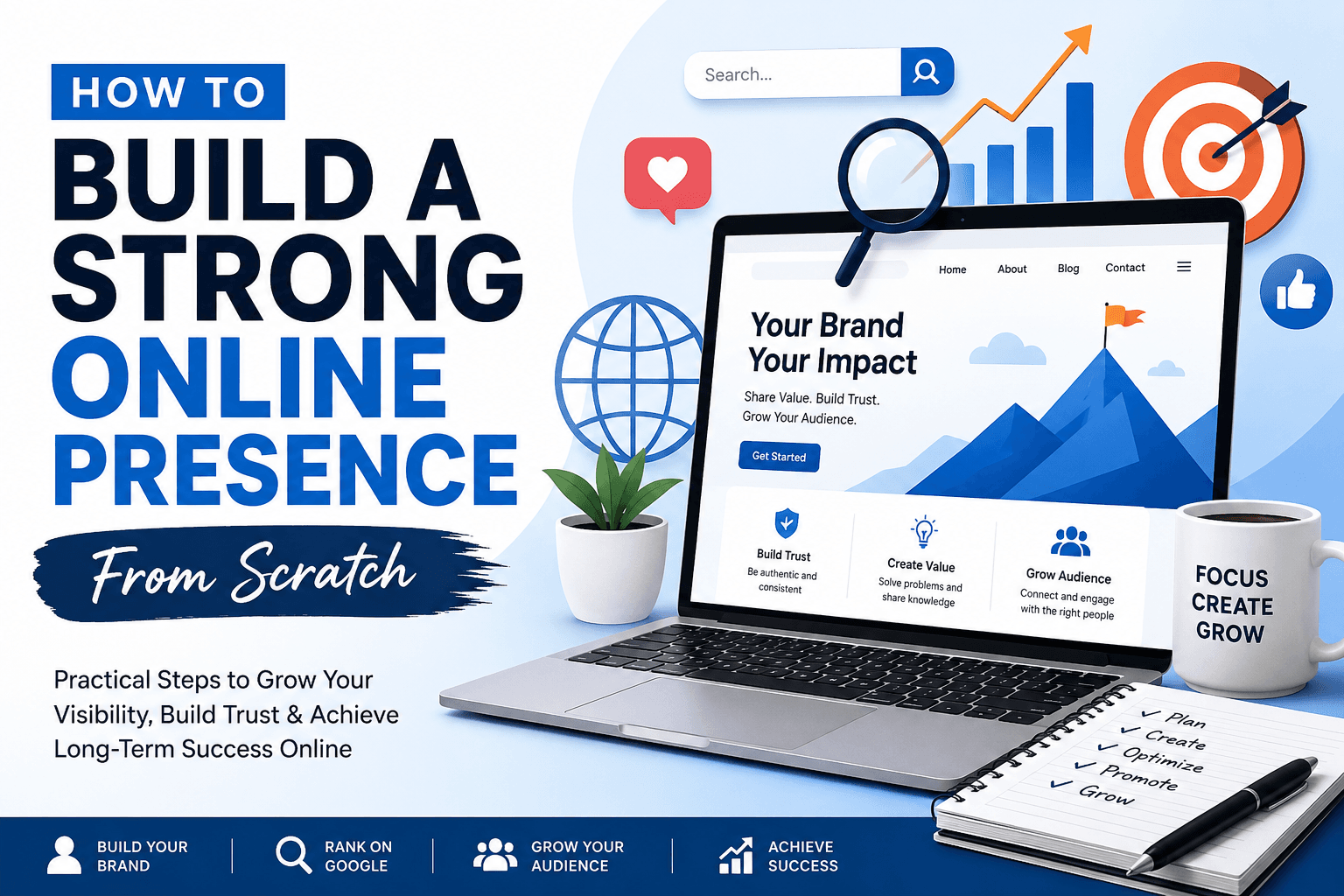
In today’s digital world, having a strong online presence is no longer optional. Whether you are a student, entrepreneur, freelancer, content creator, or business owner, your visibility online can open doors to opportunities, partnerships, and income streams.
Building an online presence from scratch may seem difficult at first, but with consistency and the right strategy, anyone can create a powerful digital identity that stands out.
What Is an Online Presence?
An online presence refers to how people see and interact with you or your brand on the internet. This includes:
. Your website or blog
. Social media accounts
. Search engine visibility
. Online reviews and mentions
. Videos, podcasts, and digital content
A strong online presence helps people trust you, discover your content, and connect with your message.
Why a Strong Online Presence Matters
Creating a strong digital presence offers several benefits:
. Builds credibility and trust
. Helps people discover your brand easily
. Increases business and networking opportunities
. Creates long-term audience growth
. Generates traffic, leads, and income opportunities
In many cases, people search online before deciding who to follow, trust, or work with.
Step 1: Define Your Brand Identity
Before creating content, understand who you are and what you want to be known for.
Ask yourself:
. What message do I want to share?
. What problem can I solve?
. What makes me unique?
. Who is my target audience?
Your brand identity should remain consistent across your blog, social media, logo, and communication style.
Step 2: Create a Professional Website or Blog
A website acts as your digital home. It gives you full control over your content and brand.
Important pages to include:
. Homepage
. About Page
. Contact Page
. Blog Section
. Privacy Policy
Using SEO-friendly platforms like WordPress can help your content rank better on search engines.
If you are interested in creating value online, you may also enjoy reading our February article on Why You Should Start Learning a New Skill Today which explains how developing modern skills can improve your digital opportunities and online growth.
Step 3: Focus on Search Engine Optimization (SEO)
SEO helps your website appear on search engines like Google.
Basic SEO tips include:
Use Relevant Keywords
Include keywords naturally in:
. Titles
. Headings
. Meta descriptions
. Image alt texts
Create Helpful Content
Google favors useful and informative articles that answer users’ questions clearly.
Improve Website Speed
A fast-loading website improves user experience and rankings.
Use Internal Linking
Linking to related articles keeps visitors engaged longer on your website.
For example, our March article on How to Identify and Use Your Natural Talents explains how understanding your strengths can help you create authentic content that attracts the right audience online.
Step 4: Build Your Social Media Presence
Social media platforms help you connect with people faster.
Choose platforms that match your audience:
. Facebook for communities and discussions
. Instagram for visual content
. TikTok for short viral videos
. LinkedIn for professional networking
. YouTube for long-form educational content
Consistency matters more than perfection.
Post regularly and interact with your audience genuinely.
Step 5: Create Valuable Content Consistently
Content is one of the strongest ways to grow online visibility.
You can create:
. Blog posts
. Videos
. Infographics
. Podcasts
. Short-form social media content
Focus on solving problems, answering questions, and sharing valuable insights.
Interestingly, our April article on The Hidden Habits Keeping You Broke highlights how consistency, discipline, and mindset can affect financial and personal growth ,qualities that are also important when building a successful online presence.
Step 6: Build Trust and Authenticity
People connect with authenticity more than perfection.
Ways to build trust include:
. Sharing honest experiences
. Responding to comments and messages
. Showing consistency in your content
. Avoiding fake engagement tactics
Trust takes time to build but can become your greatest online asset.
Step 7: Learn Basic Analytics
Tracking your growth helps you understand what works.
Tools you can use include:
. Google Analytics
. Google Search Console
. Social media insights
. WordPress analytics plugins
Pay attention to:
. Traffic sources
. Most viewed content
. Audience engagement
. Keyword performance
This helps you improve your strategy over time.
Step 8: Network and Collaborate
Collaborating with others can expose your content to new audiences.
You can:
. Guest post on blogs
. Join online communities
. Collaborate on videos or podcasts
. Participate in webinars and discussions
Networking creates opportunities that may not happen through solo efforts alone.
Common Mistakes to Avoid
Many beginners make these mistakes:
. Trying to grow on every platform at once
. Posting inconsistent content
. Ignoring SEO
. Copying others without originality
. Giving up too early
Building a strong online presence takes patience and continuous improvement.
Reflexiones finales
Building a strong online presence from scratch is a journey that requires consistency, learning, and patience. Start small, remain authentic, and focus on providing value to your audience.
Over time, your content, reputation, and digital visibility can grow into something powerful and life-changing.
The internet rewards people who consistently show up, learn new skills, and create meaningful value for others.
Deja un comentario