
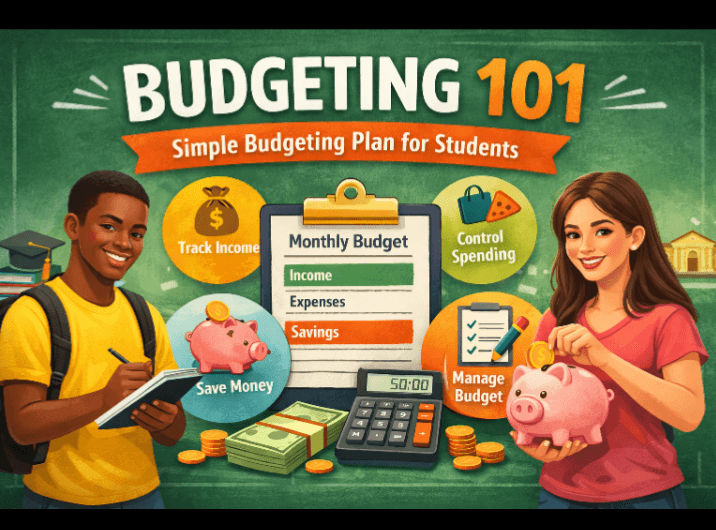
Managing money as a student can be challenging, especially with school fees, books, transportation, food, and personal expenses. Without a proper plan, it is easy to overspend and struggle financially before the month ends. Learning how to budget early helps students stay financially stable and build good money habits for the future.
This simple budgeting plan for students will help you track your income, control spending, and save money effectively.
What is Budgeting?
Budgeting is the process of planning how you will spend and manage your money within a specific period, usually weekly or monthly.
For students, budgeting helps you:
Avoid running out of money before the semester ends
Reduce unnecessary spending
Save for emergencies
Focus more on academics instead of financial stress
Why Budgeting is Important for Students
1. Prevents Overspending
A budget helps you know where your money goes and prevents impulse spending.
2. Helps You Save
Even small savings can help during emergencies or when school expenses arise.
3. Reduces Financial Stress
When your money is planned, you worry less about running out of funds.
4. Builds Financial Discipline
Students who learn budgeting early develop strong financial habits for adulthood.
Step-by-Step Simple Budgeting Plan for Students
Step 1: Calculate Your Total Income
First, determine how much money you receive each month.
Examples of student income:
Allowance from parents or guardians
Part-time job income
Scholarships or grants
Small business or online earnings
Example:
Monthly Income = ₦50,000
Step 2: List Your Essential Expenses
These are necessary expenses you cannot avoid.
Common student essentials include:
Food
Transportation
School materials
Data subscription
Accommodation
Example:
Expense
Amount
Food
₦20,000
Transport
₦8,000
Data
₦5,000
School materials
₦5,000
Total Essentials = ₦38,000
Step 3: Set a Savings Goal
A good rule for students is the 50-30-20 budgeting rule.
50% – Needs (food, transport, school items)
30% – Wants (entertainment, snacks, outings)
20% – Savings
Example:
Income = ₦50,000
Savings (20%) = ₦10,000
Saving regularly helps students prepare for emergencies or future investments.
Step 4: Control Your “Wants”
Wants include:
Eating out frequently
Buying unnecessary clothes
Subscribing to multiple entertainment platforms
Cutting down on these expenses helps you stay within your budget.
Step 5: Track Your Spending
Use simple tools like:
A notebook
Spreadsheet
Budgeting mobile apps
Tracking helps you identify spending patterns and adjust your budget.
Simple Monthly Budget Example for Students
Category
Budget
Food
₦20,000
Transport
₦8,000
Data
₦5,000
School Materials
₦5,000
Personal/Wants
₦2,000
Savings
₦10,000
Total = ₦50,000
Budgeting Tips Every Student Should Follow
1. Avoid impulse buying
Always ask yourself if the purchase is necessary.
2. Cook more often
Cooking saves more money than buying food daily.
3. Use student discounts
Many businesses offer student discounts for services and products.
4. Create an emergency fund
Even small savings like ₦500–₦1000 weekly can grow over time.
5. Review your budget monthly
Adjust your spending as your needs change.
Common Budgeting Mistakes Students Should Avoid
Not tracking expenses
Spending savings money
Ignoring small purchases
Living beyond your income
Avoiding these mistakes will help you maintain financial stability throughout your studies.
Final Thoughts
Budgeting is one of the most important financial skills every student should learn. With a simple budgeting plan, students can manage their money wisely, avoid debt, and focus more on their education.
Start small, stay consistent, and your financial discipline will grow over time.
Deja un comentario