
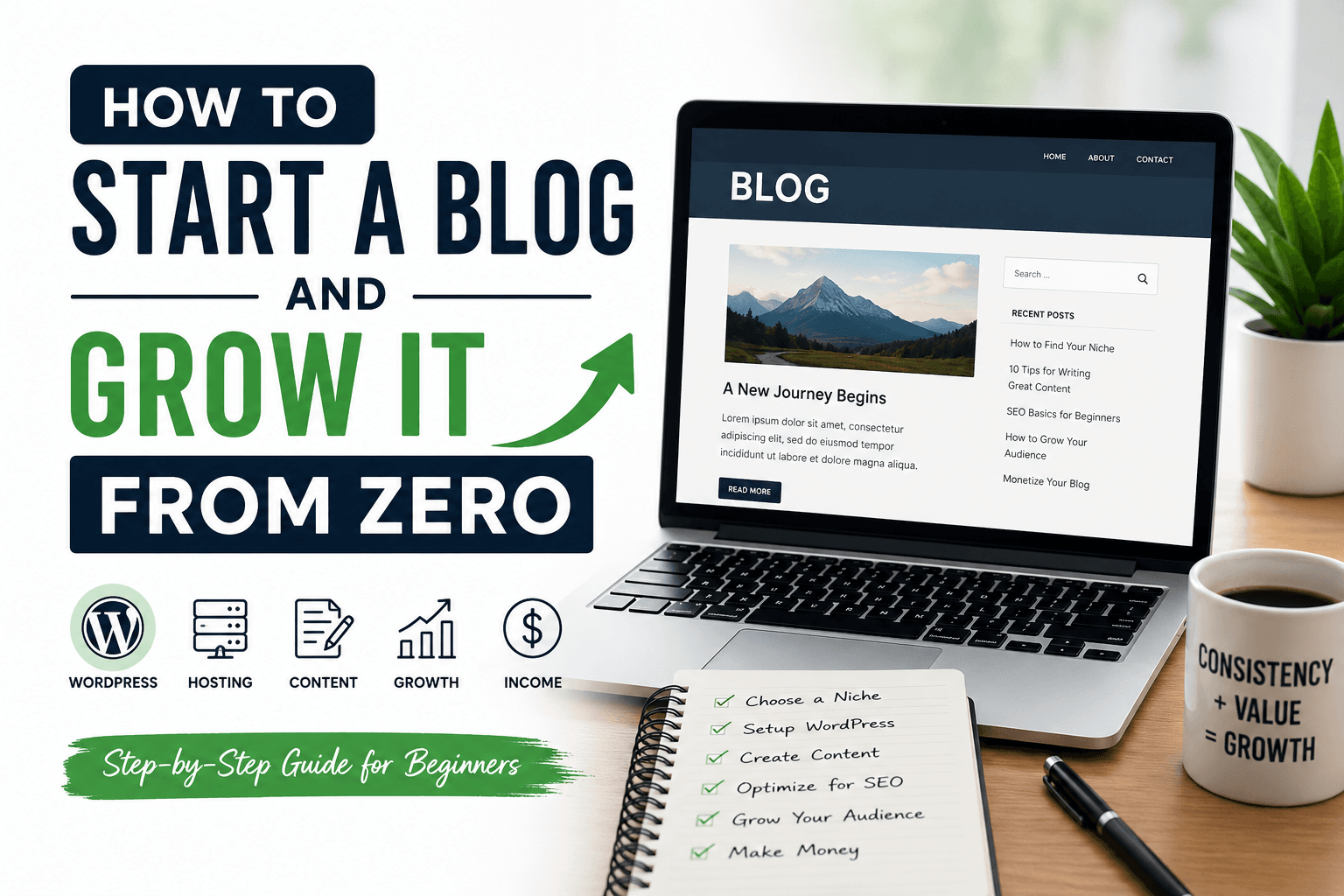
Starting a blog in 2026 is one of the smartest ways to build your personal brand, share your knowledge, and even create an extra source of income online. The good news is that you do not need to be a tech expert or have thousands of followers before you begin.
Every successful blog started with zero readers.
If you stay consistent, create valuable content, and apply the right strategies, your blog can grow steadily over time.
While Blogging Still Matters in 2026
Many people think blogging is outdated because of social media and short videos.
But blogs are still powerful because they help people:
. Find answers through search engines
. Build trust and authority
. Learn detailed information
. Generate long-term traffic
. Create income opportunities
A well-written article can continue bringing visitors for months or even years.
If you are interested in building a productive online presence, you may also enjoy reading your February article about staying focused in a connected world. In our article on How to Avoid Distractions in a Digital World we discussed practical ways to stay productive while working online.
Step 1: Choose a Blog Niche
A niche is the main topic your blog focuses on.
Choose a niche you:
. Enjoy talking about
. Can consistently create content on
. Want to learn more about
. Can help people with
Popular blog niches include:
. Education
. Health and wellness
. Technology
. Personal finance
. Motivation and self-improvement
. Fashion and beauty
. Food and recipes
. Business and entrepreneurship
For example, if you enjoy discussing growth and success habits, our March article on The Mindset Shift You Need to Succeed in Life can naturally connect with a personal development blog niche.
Step 2: Pick a Blog name
Your blog name should be:
. Easy to remember
. Simple to spell
. Related to your niche
. Unique
Examples:
. SmartLifeHub
. DailyGrowthTips
. Priceless Creative Hub
. FocusAndThrive
Try to avoid very complicated names or names with too many symbols.
Step 3: Get Hosting and Install WordPress
To make your blog live on the internet, you need:
. A domain name
. Web hosting
. WordPress installation
WordPress is one of the most popular blogging platforms because it is beginner-friendly and flexible.
Important pages every blog should have:
. Home page
. About page
. Contact page
. Privacy policy
Step 4: Design your Blog
Your blog should look:
. Clean
. Easy to navigate
. Mobile-friendly
. Fast-loading
Choose a simple WordPress theme instead of overcrowding your site with too many colors or animations.
Focus on user experience first.
Step 5: Create Valuable Content
Content is the foundation of blogging success.
Write articles that:
. Solve problems
. Answer questions
. Teach something useful
. Inspire readers
. Provide practical tips
Good blog post examples include:
. Tutorials
. List articles
. Guides
. Reviews
. Personal experiences
Our April article on “How to Set Goals You’ll Actually Achieve” is a good example of practical content that helps readers improve their lives
Step 6: Learn Basic Seo
SEO means Search Engine Optimization.
It helps your blog appear on search engines when people search for information.
Basic SEO tips:
. Use keywords naturally
. Write clear headings
. Add meta descriptions
. Use internal links
. Optimize images
Make your content easy to read
SEO is important because it helps bring free traffic to your blog consistently.
Pro Tip: Don’t chase hundreds of articles. Publishing fewer high-quality, well-optimized posts is more effective than publishing many thin articles. Focus on solving real problems and keep updating your content regularly.
Step 7: Post Consistently
Consistency matters more than perfection.
You do not need to post every day. Even posting:
. 1–2 quality articles weekly
. Or 4–6 monthly articles
. can still grow your blog steadily.
Create a content calendar to stay organized.
Step 8: Promote Your Blog
Do not just publish articles and wait.
Promote your content through:
. Facebook
. WhatsApp
. Telegram
. Pinterest
. X (Twitter)
. LinkedIn
Short videos and social media posts can also help attract readers to your blog.
If you are interested in online growth strategies, our recent article on Smart Ways to Use Your Smartphone to Make Money in 2026 can connect well with blogging and digital entrepreneurship topics.
Step 9: Build an Audience
Growing a blog takes patience.
Focus on:
. Responding to comments
. Building trust
. Helping readers
. Creating useful content consistently
People return to blogs that provide value.
Email newsletters can also help you keep readers connected to your content.
Step 10: Monitize Your Blog
Once your blog starts getting traffic, you can make money through:
. Google AdSense
. Affiliate marketing
. Sponsored posts
. Selling digital products
. Freelance services
. Online courses
Do not rush monetization too early. Build trust and quality first.
If your goal is to earn from advertising, read our guide on How to Get Google AdSense Approval Faster to understand what makes a blog ready for monetization.
Common Blogging Mistakes To Avoid
1. Giving Up Too Early
Most blogs fail because people stop posting too soon.
2. Copying Other People
Always create original content.
3. Ignoring SEO
Without SEO, your articles may struggle to get traffic.
4. Posting Without Value
Readers want helpful content, not empty articles.
5. Expecting Instant Results
Blogging is long-term growth, not overnight success.
Tools That Can Help Bloggers
Useful blogging tools include:
. WordPress
. Canva
. Grammarly
. Google Docs
. Google Search Console
. Yoast SEO
These tools can improve your writing and website performance.
Frequently Asked Questions
Can I start a blog without money?
Yes. Free platforms exist, but using your own domain and hosting gives you more control and better long-term growth.
How long does it take to grow a blog?
With consistent, high-quality content and SEO, many blogs begin seeing meaningful traffic within several months, though results vary.
Do I need coding skills to start a blog?
No. Platforms like WordPress let beginners create and manage blogs without coding.
Can blogging make money ?
Yes. Bloggers can earn through Google AdSense, affiliate marketing, sponsored content, digital products, and freelance services once they build an audience.
Final Thoughts
Starting a blog from zero may feel difficult at first, but every successful blogger once started with no audience, no traffic, and no experience.
The secret is consistency, continuous learning, and creating content that genuinely helps your readers.
Focus on creating helpful content, improving your skills, and learning as you grow. Over time, your blog can become a powerful platform for impact, opportunities, and income.
Start small, stay consistent, and keep improving one article at a time.
Leave a Reply