
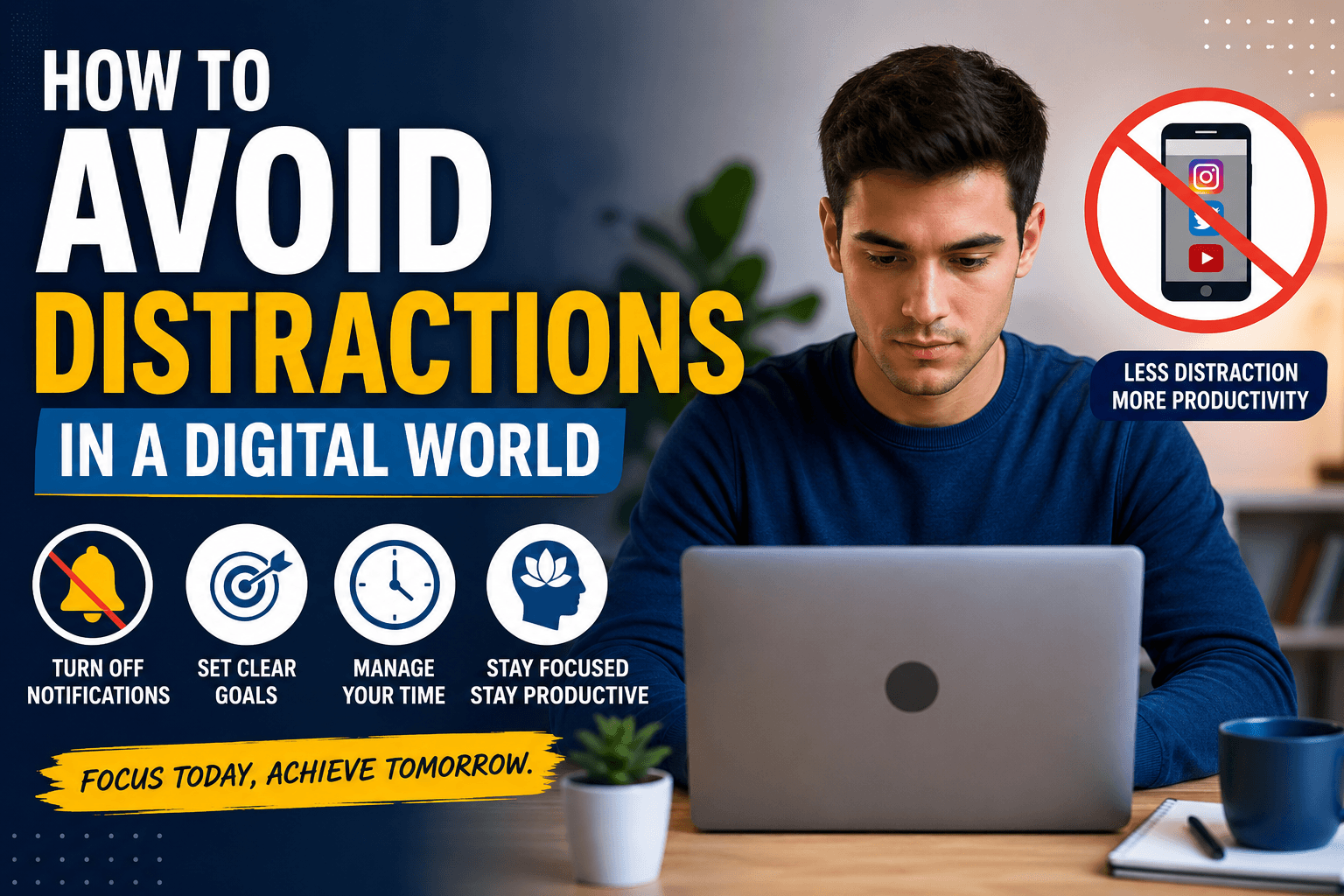
In today’s fast-moving digital world, distractions are everywhere. Notifications, social media apps, endless videos, online chats, and gaming platforms can easily steal attention and reduce productivity. While technology has many benefits, learning how to manage digital distractions is important for success in school, work, business, and personal growth.
The good news is that you do not need to completely avoid technology. Instead, you need healthy habits that help you stay focused while still enjoying the benefits of the digital world.
Why Digital Distractions Are a Big Problem
Many people spend hours scrolling through social media without realizing how much time has passed. Constant distractions can lead to:
. Poor concentration
. Low productivity
. Stress and mental fatigue
. Procrastination
. Reduced academic or work performance
. Poor sleep quality
When distractions become a daily habit, they slowly affect goals, confidence, and personal development.
1. Set Clear Daily Goals
One of the best ways to stay focused is by knowing exactly what you want to achieve each day. Create a short list of important tasks before starting your day.
For example:
. Complete school assignments
. Read for 30 minutes
. Reply to important emails
. Practice a skill
. Exercise
Having clear goals gives your mind direction and reduces unnecessary browsing.
If you want more strategies for building discipline and achieving meaningful progress, check out our article on How to Set Goals You’ll Actually Achieve, where we explained practical ways to stay committed to personal goals.
2. Turn Off Unnecessary Notifications
Notifications are one of the biggest causes of digital distraction. Every beep, vibration, or pop-up can break concentration.
Try these simple steps:
. Mute non-important apps
. Turn off social media notifications
. Use “Do Not Disturb” mode during work or study hours
. Keep your phone on silent while focusing
You do not need to respond instantly to every message.
3. Create a Dedicated Focus Environment
Your environment affects your concentration. Try to create a space that supports focus and productivity.
Helpful ideas include:
. Keep your study or work area clean
. Reduce background noise
. Avoid opening unnecessary tabs on your laptop
. Keep distracting apps away during important tasks
A simple and organized environment helps the brain stay calm and focused.
4. Use the Power of Time Blocking
Time blocking means assigning specific periods for specific activities.
Example:
Time and Activity
8:00 AM – 9:00 AM
Reading
9:00 AM – 10:00 AM
School work
10:00 AM – 10:30 AM
Break
10:30 AM – 12:00 PM
Skill learning
This method helps prevent random scrolling and improves productivity.
5. Limit Social Media Usage
Social media can consume many hours without adding real value. Instead of quitting completely, learn to control usage.
You can:
. Set app time limits
. Remove addictive apps temporarily
. Avoid using your phone immediately after waking up
. Schedule social media time instead of checking constantly
Learning balance is important in today’s digital lifestyle.
Our article on Smart Ways to Use Your Smartphone to Make Money in 2026 also explains how to turn smartphone usage into something productive rather than purely distracting.
6. Take Regular Breaks
Working for too long without breaks can reduce focus and increase stress. Short breaks help refresh the brain.
A popular method is the Pomodoro Technique:
. Focus for 25 minutes
. Take a 5-minute break
. Repeat the cycle
During breaks, stretch your body, drink water, or rest your eyes.
7. Learn to Prioritize Important Tasks
Not every notification or activity deserves your attention. Focus first on tasks that truly matter.
Ask yourself:
. Is this helping my goals?
. Is this urgent or just entertainment?
. Can this wait until later?
Prioritizing helps you use time wisely and avoid unnecessary distractions.
8. Develop Self-Discipline
Technology control starts with self-control.
Discipline helps you stay focused even when distractions are available.
Ways to build discipline include:
. Keeping promises to yourself
. Following routines consistently
. Reducing procrastination
. Practicing delayed gratification
You may also enjoy reading our article on How to Build Confidence Even When You Feel Insecure, because confidence and discipline often work together in personal growth.
9. Get Enough Sleep and Rest
Lack of sleep reduces concentration and increases mental fatigue. People who are tired are more likely to waste time online because the brain struggles to focus.
Healthy sleep habits include:
. Sleeping at consistent times
. Reducing screen exposure before bed
. Avoiding late-night scrolling
. Creating a relaxing bedtime routine
Good rest improves productivity and mental clarity.
10. Use Technology Productively
Technology itself is not the enemy. The key is using it wisely.
Instead of spending all your time on entertainment, use technology to:
. Learn new skills
. Read educational content
. Build online businesses
. Network professionally
. Improve your career opportunities
Our article on Top Free Tools Every Student Should Be Using in 2026 shares useful digital tools that can improve productivity and learning.
Benefits of Reducing Digital Distractions
When you reduce distractions, you may notice:
. Better focus
. Improved academic performance
. Increased productivity
. Better time management
. Reduced stress
. More confidence and motivation
Small daily improvements can create major long-term success.
Final Thoughts
Living in a digital world means distractions will always exist, but you can learn how to manage them effectively. Staying focused requires intentional habits, self-discipline, and smart use of technology.
Start with small changes such as muting notifications, setting daily goals, and limiting unnecessary screen time. Over time, these habits can improve productivity, mental clarity, and personal growth.
Technology should be a tool that supports your goals, not something that controls your attention.
Leave a Reply