
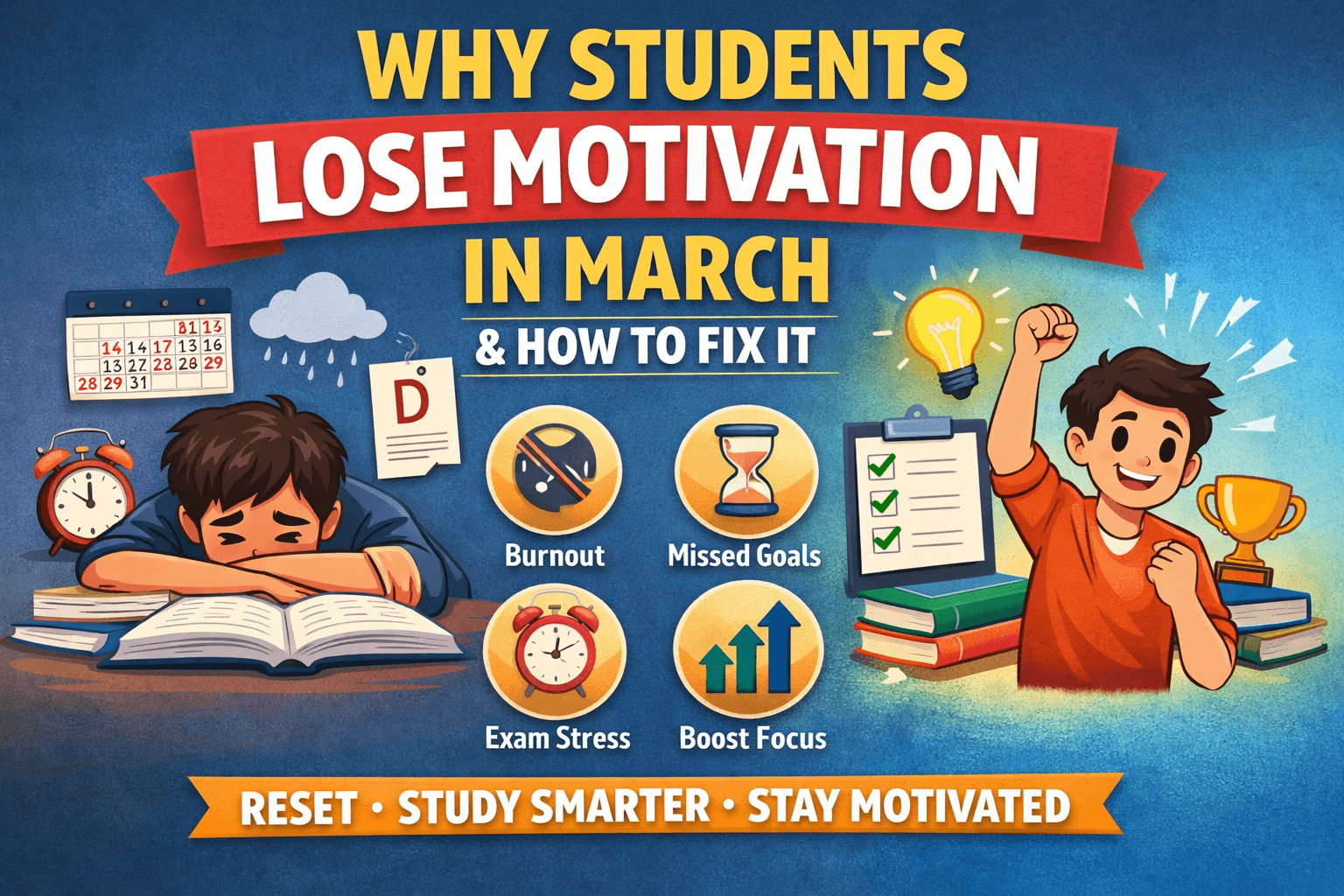
March is a dangerous month for students.
January comes with excitement. February still carries momentum. But by March, energy drops, goals feel heavy, and procrastination increases.
If you’re feeling less motivated right now, you’re not lazy. There are real psychological and academic reasons behind it.
Let’s break it down.
Why Students Lose Motivation in March
1. The “First Quarter Fatigue” Effect
By March, you’ve been studying for months without a long break. Your brain starts craving rest.
. Assignments pile up. Tests become frequent. The initial excitement of a new semester fades.
. Result? Mental exhaustion.
2. Unrealistic January Goals
Many students set big goals in January:
“I’ll read 5 hours daily.”
“I’ll never procrastinate again.”
“I’ll score all A’s.”
By March, reality sets in. When expectations don’t match performance, discouragement begins.
3. No Visible Results Yet
Success in academics is delayed.
You may be studying hard but:
. Results aren’t out yet
. GPA hasn’t improved yet
. Recognition hasn’t come yet
Lack of immediate reward reduces motivation.
4. Academic Pressure Increases
March often comes with:
. Continuous assessments
. Project deadlines
. Group work stress
. Upcoming exams
Stress drains energy, especially if time management is poor.
5. Weather and Mood Changes
In many places, seasonal shifts affect mood and productivity. Lower energy levels can reduce concentration.
How to Fix March Motivation Loss
Now the important part — solutions.
1. Reset Your Goals (Don’t Abandon Them)
Instead of quitting, adjust.
Change:
❌ “Study 5 hours daily”
✅ “Study 2 focused hours daily”
Small consistent effort beats burnout.
2. Create a 14-Day Reset Plan
Don’t think about the whole semester.
Think short-term.
For the next 14 days:
. Wake up at a fixed time
. Study at the same hour daily
. Reduce distractions
. Track progress
Short-term discipline rebuilds long-term motivation.
3. Switch to Active Studying
Passive reading kills motivation.
Instead:
. Summarize chapters
. Teach someone
. Solve past questions
. Use flashcards
When studying feels engaging, motivation increases.
4. Clean Your Study Environment
Your environment affects your mindset.
. Remove clutter
. Organize your desk
. Delete distracting apps
. Change study location if necessary
Sometimes a fresh space resets your brain.
5. Reward Yourself Properly
After finishing:
. A chapter
. An assignment
. A productive study session
Reward yourself with:
. A short walk
. Music
. A favorite snack
. 30 minutes of entertainment
Reward reinforces discipline.
6. Reconnect With Your “Why”
Ask yourself:
. Why did I start this course?
. What kind of future do I want?
. What happens if I give up now?
Clarity rebuilds drive.
7. Avoid Comparison
In March, students start comparing:
. Grades
. Reading speed
. Academic progress
Comparison kills motivation.
Focus on personal improvement, not competition.
Bonus: The 3-3-3 Motivation Formula
When overwhelmed:
. Study for 3 hours
. Focus on 3 important tasks
. Remove 3 distractions
Simple. Clear. Effective.
Final Thoughts
March is not the time to quit.
It is the time to adjust.
Most students lose motivation because they rely on feelings. Successful students rely on structure and discipline.
Motivation fades. Systems sustain.
Reset now, and you’ll thank yourself at the end of the semester.
Leave a Reply